
 Portugues
 Pусский
Driven roller
Driven Roller: Function, Design, and Applications A driven roller is a cylindrical component that transmits rotational motion and power within a mechanical system. Unlike idler rollers, which rotate freely to support movement, driven rollers are actively powered, typically by an electric motor, gearbox, or belt system, to drive conveyor belts, sheets, or other materials. They play a critical role in industries such as manufacturing, packaging, logistics, and material handling by ensuring controlled movement, tension regulation, and precise positioning of products. Design and Construction Driven rollers are engineered for durability and efficiency. Key design elements include: - Core Material: Often made from steel, aluminum, or high-strength plastics, depending on load requirements. - Surface Coating: Rubber, polyurethane, or textured finishes enhance grip and reduce slippage. - Bearings: Sealed or lubricated bearings ensure smooth rotation and reduce friction. - Shaft Configuration: Integrated or extended shafts connect to drive mechanisms like chains, sprockets, or direct motor couplings. - Diameter and Length: Sized to match system specifications, balancing torque, speed, and load capacity. Working Principle The driven roller receives power from a motor or transmission system, converting it into rotational motion. This motion is transferred to a conveyor belt or material in contact with the roller, enabling controlled linear movement. Speed and torque can be adjusted via variable frequency drives (VFDs) or mechanical gearing. Applications 1. Conveyor Systems: Used in assembly lines, warehouses, and airports to transport goods. 2. Printing and Paper Handling: Ensures precise paper feed in printers, copiers, and presses. 3. Packaging Machinery: Moves products through sealing, labeling, or sorting stages. 4. Textile and Metal Processing: Guides fabrics or sheets during cutting, rolling, or coating. Advantages - Precision: Enables accurate speed synchronization in automated systems. - Efficiency: Reduces manual intervention and improves throughput. - Versatility: Adaptable to various industries with customizable coatings and dimensions. Maintenance Considerations Regular inspection of bearings, alignment, and surface wear ensures longevity. Lubrication and cleaning prevent debris buildup, while timely replacement of damaged rollers avoids downtime. In summary, driven rollers are indispensable in modern automation, combining robust engineering with operational flexibility to enhance productivity across diverse sectors.
Products
Category:
Roller
-
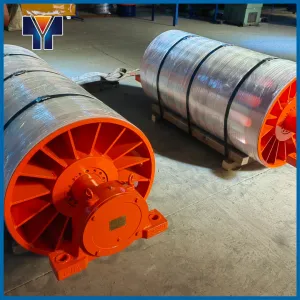
delivery roll
Category: RollerBrowse number: 6Number:Release time: 2025-09-19 10:18:39The drum is a core cylindrical component in equipment such as conveyors, printing, and mining, usually made of metal (such as carbon steel, stainless steel) or non-metallic materials, and achieves material conveying, guiding, or power transmission functions through rotational motion.From a structural perspective, a drum is generally composed of a cylinder body, shaft, bearings, seals, and other parts. Some drums are also equipped with sprockets, gears, or drum rubber surfaces to improve transmission efficiency or increase friction.Classified by function (taking the conveyor field as an example...
News
Category:
-
[Roller Group]Heavy-duty trough-type idlers
2026-01-05 10:39:28 -
[Roller Group]Belt conveyor drum: advantages of customized design
2026-01-29 13:27:07
Case
Category:
No search results found!
Video
Category:
No search results found!
Download
Category:
No search results found!
Job
Category:
No search results found!
Featured Products
-
NEWS
delivery roll
Learn more



 Phone
Phone