
 Portugues
 Pусский
delivery roll
Delivery Roll: A Comprehensive Overview A delivery roll is a critical component used in various industrial and manufacturing processes, particularly in the paper, printing, textile, and packaging industries. It serves as a medium for transporting, guiding, or processing continuous materials such as paper, film, fabric, or metal sheets through production lines. The design, material, and functionality of a delivery roll directly impact efficiency, product quality, and operational reliability. Function and Applications Delivery rolls are primarily responsible for moving materials smoothly from one stage of production to another. In printing presses, they ensure precise paper alignment to avoid misprints. In paper mills, they facilitate uniform tension control during winding or unwinding. Textile manufacturers use them to guide fabrics through dyeing or finishing processes, while packaging industries rely on them for seamless film or foil handling. Their versatility makes them indispensable in continuous production systems. Design and Materials The construction of a delivery roll depends on its application. Common materials include steel, aluminum, rubber-coated metals, or composite polymers, each chosen for durability, friction resistance, or weight considerations. Precision balancing is crucial to prevent vibrations that could damage materials. Some rolls feature specialized surfaces—such as grooves, knurling, or coatings—to enhance grip or reduce static. Bearings or shafts are integrated to ensure smooth rotation at varying speeds. Performance Factors Key performance metrics include: - Surface Hardness: Determines wear resistance and longevity. - Runout Tolerance: Ensures minimal deviation for high-speed operations. - Thermal Stability: Critical for processes involving heat (e.g., laminating). - Maintenance Requirements: Sealed bearings or easy-access designs reduce downtime. Challenges and Innovations Common issues include material slippage, surface wear, and misalignment. Modern advancements address these through: - Smart Sensors: Monitor tension and alignment in real time. - Self-Cleaning Coatings: Reduce debris buildup. - Lightweight Composites: Improve energy efficiency without sacrificing strength. Conclusion Delivery rolls may seem like simple mechanical parts, but their role in industrial workflows is profound. By optimizing their design and materials, manufacturers can achieve higher productivity, reduced waste, and consistent product quality. Continuous innovation ensures they meet the evolving demands of automated and precision-driven industries.
Products
Category:
-
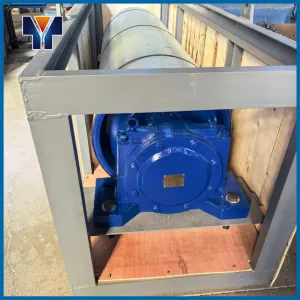
pulley
Category: RollerBrowse number: 1Number:Release time: 2025-09-19 10:14:16From a structural perspective, a drum is generally composed of a cylinder body, shaft, bearings, seals, and other parts. Some drums are also equipped with sprockets, gears, or drum rubber surfaces to improve transmission efficiency or increase friction. -
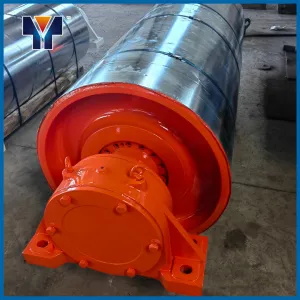
conveyor idler
Category: RollerBrowse number: 2Number:Release time: 2026-01-05 14:39:48The drum is a core cylindrical component in equipment such as conveyors, printing, and mining, usually made of metal (such as carbon steel, stainless steel) or non-metallic materials, and achieves material conveying, guiding, or power transmission functions through rotational motion.From a structural perspective, a drum is generally composed of a cylinder body, shaft, bearings, seals, and other parts. Some drums are also equipped with sprockets, gears, or drum rubber surfaces to improve transmission efficiency or increase friction.Classified by function (taking the conveyor field as an example...
News
Category:
-
[Conveyor Roller]Customized rubber-coated drive rollers
2025-09-19 10:58:23
Case
Category:
No search results found!
Video
Category:
No search results found!
Download
Category:
No search results found!
Job
Category:
No search results found!
Featured Products
-
NEWS
pulley
Learn more -
NEWS
conveyor idler
Learn more



 Phone
Phone