
 Portugues
 Pусский
tension pulley
Tension Pulley: Function, Design, and Applications A tension pulley, also known as an idler pulley, is a crucial component in mechanical systems, particularly in belt-driven mechanisms. Its primary function is to maintain proper tension in belts, ensuring efficient power transmission between rotating shafts while reducing slippage and wear. Tension pulleys are widely used in automotive engines, industrial machinery, HVAC systems, and conveyor belts, among other applications. Function and Importance The tension pulley serves two key purposes: 1. Belt Tension Control: It applies consistent pressure to the belt, preventing slack that could lead to misalignment, vibration, or reduced efficiency. Proper tension ensures optimal power transfer and prolongs belt life. 2. Belt Guidance: It redirects belts around obstacles or adjusts their path to align with other pulleys, ensuring smooth operation. Without a tension pulley, belts may stretch over time, causing slippage, noise, or even complete failure of the system. Design and Components A typical tension pulley consists of: - Pulley Wheel: A grooved or flat wheel that rotates with the belt, often made from durable materials like steel, aluminum, or reinforced polymers. - Bearing Assembly: Allows smooth rotation and reduces friction. Sealed bearings are common to prevent contamination. - Mounting Bracket: Attaches the pulley to the engine block, frame, or other structures. - Spring or Adjustable Mechanism: Some tension pulleys use springs or manual adjustments to maintain tension as belts stretch. Types of Tension Pulleys 1. Fixed Tension Pulleys: Permanently set in position, requiring manual adjustment if belt tension changes. 2. Automatic Tensioners: Incorporate springs or hydraulic mechanisms to self-adjust tension as belts wear. Common in modern automotive engines. 3. Idler Pulleys: Non-driven pulleys that guide belts without transferring power. Applications - Automotive: Used in serpentine belt systems to drive alternators, power steering pumps, and air conditioning compressors. - Industrial Machinery: Ensures proper belt tension in conveyor systems, manufacturing equipment, and agricultural machinery. - HVAC Systems: Maintains tension in blower belts for consistent airflow. Maintenance and Failure Signs A failing tension pulley may produce squealing noises, excessive belt wear, or visible wobbling. Regular inspection and lubrication (if applicable) are essential to prevent breakdowns. In summary, the tension pulley is a small but vital component that enhances the efficiency, reliability, and longevity of belt-driven systems across various industries. Its design and functionality ensure smooth operation while minimizing maintenance requirements.
Products
Category:
-
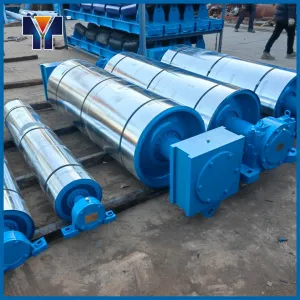
delivery cylinder
Category: RollerBrowse number: 3Number:Release time: 2026-01-05 14:39:18The conveyor drum is the power core and transmission key component of a belt conveyor. Its main function is to transmit power, support the conveyor belt, change the direction of the conveyor belt, and directly determine the operating efficiency and stability of the conveyor. It is widely suitable for light and heavy conveyor systems in industries such as mining, coal, metallurgy, grain, and building materials.Core Categories and FunctionsDrive drumAs the power output component of the conveyor, it is connected to power devices such as motors and reducers, and drives the entire conveyor belt to... -
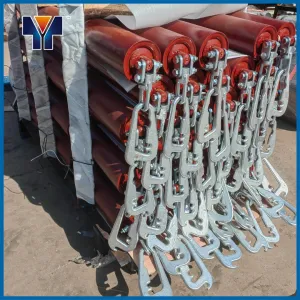
Hanging roller group
Category: Roller groupBrowse number: 2Number:Release time: 2026-01-05 15:31:15Hanging roller set is a special roller component of belt conveyor, mainly used in conveying scenarios with large inclination angle, long distance or limited space, which is different from the installation method of conventional floor type roller set.Core Definition and StructureIt consists of multiple sets of rollers (usually groove rollers), suspension brackets, adjustment rods, and other components. It is fixed to the roadway roof, truss, or special crossbeam above the conveyor through the top suspension structure (such as boom, wire rope, hinge), rather than being installed on the bottom fr...
News
Category:
-
[Roller Group]Self-aligning and deviation correction idler
2026-01-05 10:42:32
Case
Category:
No search results found!
Video
Category:
No search results found!
Download
Category:
No search results found!
Job
Category:
No search results found!
Featured Products
-
NEWS
delivery cylinder
Learn more -
NEWS
Hanging roller group
Learn more



 Phone
Phone