
 Portugues
 Pусский
crossgirder
Crossgirder: A Key Structural Component in Modern Construction A crossgirder is a critical structural element widely used in various construction projects, particularly in bridges, industrial buildings, and large-span structures. It serves as a horizontal beam that provides support and stability by transferring loads from the superstructure to the vertical supports, such as columns or piers. Due to its essential role in distributing weight and resisting bending forces, the crossgirder is a fundamental component in ensuring the durability and safety of engineered structures. Design and Functionality Crossgirders are typically made from high-strength materials such as steel, reinforced concrete, or composite materials, depending on the project requirements. Steel crossgirders are favored for their high load-bearing capacity and flexibility, making them ideal for long-span applications. Reinforced concrete crossgirders, on the other hand, offer excellent durability and resistance to environmental factors, while composite girders combine the advantages of both materials. The primary function of a crossgirder is to support transverse loads, such as those from decks, floors, or roofing systems, and transfer them to the main longitudinal girders or supports. This ensures even load distribution, preventing excessive stress on any single structural element. Additionally, crossgirders enhance rigidity, reducing deflection and vibration under dynamic loads, such as traffic or wind forces. Applications in Construction In bridge construction, crossgirders are often used in conjunction with main girders to form a grid-like framework, improving the bridge’s overall stability. They are especially crucial in cable-stayed and suspension bridges, where they help maintain deck alignment and resist torsional forces. In industrial and commercial buildings, crossgirders support heavy machinery, mezzanine floors, or roofing systems. Their ability to span large distances without intermediate supports makes them a cost-effective solution for open-plan spaces like warehouses, airports, and stadiums. Advancements and Innovations Modern engineering has introduced innovations such as pre-stressed crossgirders, which use tensioned cables to enhance load capacity, and lightweight composite designs that reduce material usage without compromising strength. Computer-aided design (CAD) and finite element analysis (FEA) further optimize crossgirder performance, ensuring precise load calculations and efficient material utilization. Conclusion The crossgirder remains an indispensable element in structural engineering, offering versatility, strength, and reliability across various applications. As construction techniques evolve, crossgirders will continue to play a vital role in shaping resilient and sustainable infrastructure. Their design and implementation reflect the ongoing advancements in materials science and engineering, ensuring safer and more efficient structures for the future.
Products
Category:
-
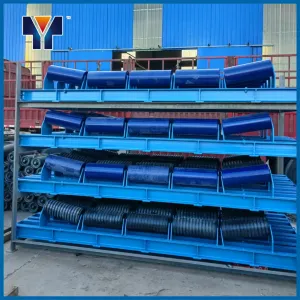
beam
Category: BeamBrowse number: 1Number:Release time: 2026-01-05 15:56:32The crossbeam of the conveyor is the core transverse support component of the conveyor frame, which is a key structural component connecting the columns (longitudinal beams) on both sides of the frame. Its main function is to fix the core components such as the roller group and the roller bearing seat, while enhancing the overall rigidity and stability of the frame, and preventing deformation or shaking of the conveyor during heavy load and high-speed operation.Core Structure and ClassificationMaterial and CraftsmanshipUsually, steel sections (channel steel, I-beams, square steel) or thick wal...
News
Category:
-
[Roller Group]Customized irregular-shaped idlers
2026-01-05 13:56:34
Case
Category:
No search results found!
Video
Category:
No search results found!
Download
Category:
No search results found!
Job
Category:
No search results found!
Featured Products
-
NEWS
beam
Learn more



 Phone
Phone