
 Portugues
 Pусский
cross beam
Cross Beams: The Unsung Backbone of Structural IntegrityIn the vast and intricate world of structural engineering and construction, few components are as fundamentally crucial yet quietly unassuming as the cross beam. This horizontal or inclined member, designed primarily to resist bending, serves as a critical nexus, transferring loads across spaces to provide stability, strength, and shape to everything from humble sheds to soaring bridges and complex industrial frameworks.At its core, the function of a cross beam is elegantly simple: to span an open space, carrying the weight from above and distributing it to its vertical supports, typically columns or walls. This action prevents sagging and collapse, defining the usable area beneath. Whether it's supporting the floor above in a house, carrying the rails of a railway bridge, or forming the roof structure of a warehouse, the cross beam is the workhorse that makes open, column-free spaces possible. Its performance under load—resisting the downward forces of gravity (dead load) and the variable forces of occupancy, weather, or machinery (live load)—is a primary determinant of a structure's safety and longevity.The effectiveness of a cross beam is governed by a synergy of material, geometry, and placement. Historically, timber was the material of choice, prized for its workability and tensile strength. The industrial revolution brought forth wrought iron and, ultimately, steel, whose exceptional strength-to-weight ratio and ability to be formed into efficient shapes like I-beams revolutionized construction, allowing for longer spans and taller buildings. Today, reinforced and pre-stressed concrete beams offer immense compressive strength and fire resistance, while modern composites push the boundaries of lightness and durability. The shape of the beam itself is an exercise in optimized engineering. The ubiquitous I-beam, with its wide flanges and slender web, concentrates material where it is most needed to resist bending stresses, maximizing strength while minimizing weight and material cost.Beyond mere load-bearing, cross beams play a vital role in a structure's overall stability. In steel or concrete frames, they act as critical links in the lateral load-resisting system. By rigidly connecting to columns, they form moment-resisting frames that help structures withstand horizontal forces from wind or earthquakes, preventing excessive sway and potential catastrophic failure. In timber framing, beams and their connections are meticulously designed to create a rigid box-like structure that distributes these forces throughout the system.The installation of a cross beam is often a pivotal moment in a construction project. It marks the transition from vertical erection to the creation of definable floors and sheltered spaces. Seeing the first major beam lifted into place—"topping out"—is a traditional milestone, symbolizing the skeleton of the building taking its definitive form.From the exposed, hand-hewn oak beams of a Tudor inn, radiating historical craftsmanship, to the sleek, galvanized steel lattice supporting a modern airport canopy, cross beams are a testament to the evolution of engineering. They may often be hidden behind ceilings and walls, but their presence is felt in the solidity of the floor underfoot, the clear span of a grand hall, and the resilient stance of a tower against a storm. They are the silent, steadfast sentinels of structural integrity, quietly ensuring that our built environment stands firm, safe, and functional.
Products
Category:
Beam
-
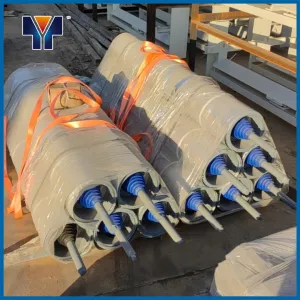
transom
Category: BeamBrowse number: 1Number:Release time: 2026-01-05 16:16:46The crossbeam of the conveyor is the core transverse support component of the conveyor frame, which is a key structural component connecting the columns (longitudinal beams) on both sides of the frame. Its main function is to fix the core components such as the roller group and the roller bearing seat, while enhancing the overall rigidity and stability of the frame, and preventing deformation or shaking of the conveyor during heavy load and high-speed operation.Core Structure and ClassificationMaterial and CraftsmanshipUsually, steel sections (channel steel, I-beams, square steel) or thick wal...
News
Category:
No search results found!
Case
Category:
No search results found!
Video
Category:
No search results found!
Download
Category:
No search results found!
Job
Category:
No search results found!
Featured Products
-
NEWS
transom
Learn more



 Phone
Phone