
 Portugues
 Pусский
bend pulley
Bend Pulley: Function, Design, and Applications A bend pulley is a critical component in belt conveyor systems, primarily used to change the direction of the belt or provide tension to ensure smooth operation. Unlike drive pulleys, bend pulleys are not powered but serve as passive guiding elements that help maintain belt alignment and reduce wear. They are commonly installed at the tail or take-up sections of a conveyor system, as well as at points where the belt needs to change direction. Function and Role The primary function of a bend pulley is to redirect the conveyor belt, allowing it to loop back or navigate around obstacles. It also helps in maintaining proper belt tension, which is essential for preventing slippage and ensuring efficient material transport. By supporting the belt’s return side, bend pulleys reduce stress on the belt and minimize the risk of misalignment, which can lead to premature wear or damage. Design and Construction Bend pulleys are typically constructed from durable materials such as steel or engineered polymers, depending on the application requirements. The pulley consists of a central shaft, end discs, and a cylindrical shell, often coated or lagged with rubber or ceramic to enhance grip and reduce belt slippage. The design may include self-cleaning features, such as grooves or coatings, to prevent material buildup and ensure consistent performance. Key design considerations include: - Diameter: Larger diameters reduce bending stress on the belt, extending its lifespan. - Lagging: Rubber or ceramic lagging improves friction and protects the belt surface. - Bearings: High-quality bearings ensure smooth rotation and reduce maintenance needs. Applications Bend pulleys are widely used in industries such as mining, agriculture, manufacturing, and logistics. They are essential in long-distance conveyor systems, where belt tension and directional changes are frequent. In mining, for example, bend pulleys help navigate belts around rugged terrain, while in food processing, they ensure hygienic and efficient material handling. Maintenance and Troubleshooting Regular inspection of bend pulleys is necessary to prevent operational issues. Common problems include misalignment, bearing failure, and lagging wear. Proper lubrication, alignment checks, and timely replacement of worn components can significantly extend the pulley’s service life. Conclusion Bend pulleys play a vital role in conveyor systems by ensuring smooth belt movement, proper tension, and directional changes. Their robust design and material selection make them suitable for demanding industrial environments. Understanding their function and maintenance requirements helps optimize conveyor performance and reduce downtime. By integrating high-quality bend pulleys into a conveyor system, operators can enhance efficiency, reduce operational costs, and prolong the lifespan of both the belt and the pulley itself.
Products
Category:
-
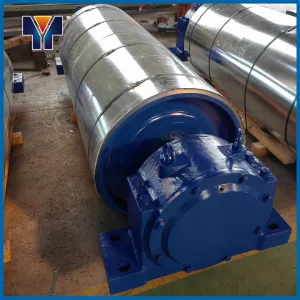
transfer roller
Category: RollerBrowse number: 2Number:Release time: 2025-09-19 10:18:39The drum is a core cylindrical component in equipment such as conveyors, printing, and mining, usually made of metal (such as carbon steel, stainless steel) or non-metallic materials, and achieves material conveying, guiding, or power transmission functions through rotational motion.From a structural perspective, a drum is generally composed of a cylinder body, shaft, bearings, seals, and other parts. Some drums are also equipped with sprockets, gears, or drum rubber surfaces to improve transmission efficiency or increase friction.Classified by function (taking the conveyor field as an example...
News
Category:
-
[Roller Group]Drive roller and idler matching system
2026-01-05 10:38:51
Case
Category:
No search results found!
Video
Category:
No search results found!
Download
Category:
No search results found!
Job
Category:
No search results found!
Featured Products
-
NEWS
transfer roller
Learn more



 Phone
Phone